
Net Zero, Are We There Yet?
A Moving Target – But We Need to Start Now!
Buildings are responsible for a significant share of energy consumption and carbon emissions. Residential and commercial buildings in the U.S. account for approximately 25% of all energy usage while the remaining 75% is split between the transportation and industrial sectors.
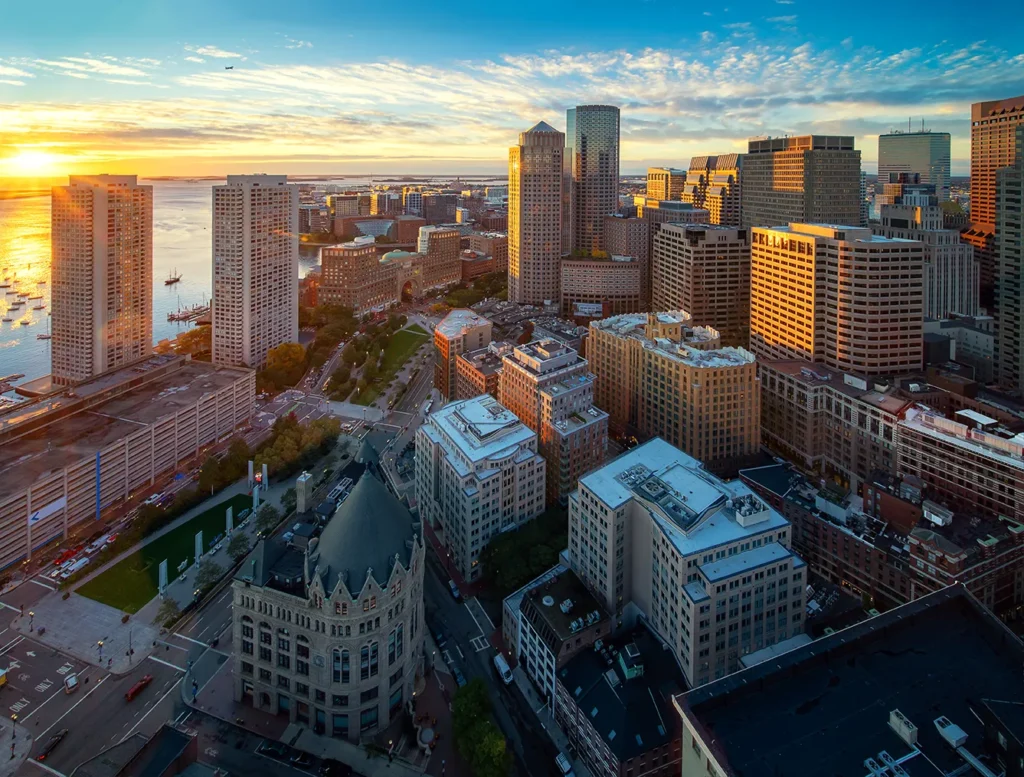
Why is this especially critical in Massachusetts? Here, buildings contribute to 35% of statewide emissions, largely due to heating demand. Our cold climate requires heating most of the year, and much of our building stock still relies on fossil fuels like natural gas and oil. This makes electrification and efficiency upgrades critical steps in the path to Net Zero.
The Challenge of Existing Buildings
Contradictions in Energy Use
Our awareness of how we contribute to carbon and greenhouse gas emissions—whether through how we work, eat, or play—is murky at best. Our daily choices often pull us in different directions. We may walk to work or take public transit, but we plug in more devices than ever before. Many of us work remotely and own fewer cars, yet we rely on rideshares and delivery services that increase transportation emissions.
I say “we” because I recognize these contradictions in my personal energy usage. The reality is that no one is perfectly Net Zero, but that shouldn’t stop us from making progress.
Stricter Energy Codes & The Evolution of Green Building
The development and building industry have dramatically improved on its energy usage in new buildings, largely due to stricter energy codes like “Stretch Code”. The increasingly stricter energy codes are a welcome change to a lack of awareness around energy efficiency which historically overlooked carbon emissions from fossil fuels except during an energy crisis. Also, early green building practices from about two decades ago didn’t focus on quantifiable energy use reduction or agreed upon standards resulting in negative terms like “green washing”.
One of the most impactful advancements in energy-efficiency design has come from Passive House Institute U.S. (PHIUS). By introducing a climate-specific energy modeling tool, WUFI, PHIUS created a complete framework for energy efficiency in buildings. WUFI allows for a full understanding of energy use in buildings and offers design tools that can help reduce our energy usage by up to 90% in new buildings The United States Green Building Council also introduced LEED (Leadership in Energy and Environmental Design) which is the world’s most widely used green building rating system.
Renovations, however, remain much more complex and costly, making deep energy retrofits a critical (but difficult) area for progress and we’ll discuss this in future newsletters.
What is a Net Zero building and how to approach it?
An energy-efficient building where, on a source energy basis, the actual annual delivered energy is less than or equal to the on-site renewable exported energy.” – The Department of Energy
As a developer, I know that to achieve a “Net Zero” building, its best to start with new construction and aim for up to a 90% energy usage reduction over a code compliant building to that a project can be “Net Zero Ready”. The PHIUS framework is the best path for net zero since it emphasizes minimal energy loss by optimizing building enclosure while maintaining interior air quality and temperature. If I have the budget to integrate solar on a project then I can offset the energy use so my project can meet the definition of “Net Zero” set by DOE. Multiple steps are key since the last bit of energy efficiency is sometimes cost prohibitive that it may not be feasible and delivering an “Almost Net Zero” building would be best than not attempting the project at all.
But here’s the dirty secret about net zero buildings, well they aren’t really Zero. Net Zero buildings are still creating carbon because they rely on energy powered by a grid that today is about 90% powered by carbon emitting fossil fuels. Even when a building offsets all of its’ energy needs through clean renewable source like roof solar panels, it still taps into a power grid that predominantly runs on carbon-emitting sources. The key here is the word “Net” which means that the building may have surplus energy from generating power on site but typically can’t store it for long and still taps into the electric grid which is using fossil fuels. Sure its using a fraction but the issue here of carbon just moved upstream to the source, the power plant.
The Developer's Dilemma
I find it frustrating to do all this work electrifying buildings, modeling energy usage, stuffing walls with insulation, losing sellable square footage due to thicker walls, wrapping structures in expensive weatherproofing vests, and installing premium double or triple glazed windows to reduce energy use then plugging back into a grid that is mostly burning fossil fuels and emitting carbon.
All this energy efficiency design comes at a premium, yet there are few financial incentives to offset these costs. While developers comply with stricter energy codes, we rarely see meaningful support, no tax breaks, no reductions in permitting fees, and little recognition for solving a collective problem of carbon emissions. Instead, we receive token incentives from the utility companies that fail to address the real financial burden. I also don’t see the right level of commitment and scrutiny of expanding public transportation and greening the grid happening at the pace it’s needed. Despite these frustrations, I know that carbon emissions is a very big problem and requires a bold approach. I also know that when I aim to develop a net zero building, I am working to be part of the solution rather than contributing to the problem.
From Policy to Practice
Every step in reducing our planet’s carbon emissions is a step closer to protecting it. It might be helping a farmer in a remote location avoid extreme weather impacting their crop or slowing the flooding of our coastal cities. So, by building an all-electric net zero buildings today we are early adopters and active participants in a better future. A future that is now taking shape through Governor Maura Healey’s Clean Energy Transition vision, a bold plan and approach aiming to achieve a clean power grid and net-zero greenhouse gas emissions in Massachusetts by 2050.
While carbon emissions reduction requires long-term policy commitments like those set by Governor Healey and a few more decades to take place, real change happens on the ground. As a woman-led development firm, Zeta InSite is proud to have developed two net zero buildings, while witnessing women play a pivotal role in shaping sustainability both in policy and in real estate. One of the most significant contributions women have made to real estate sustainability is championing green building standards. Over the last two decades, women in architecture, engineering, and real estate development have advocated for the adoption of LEED (Leadership in Energy and Environmental Design) and Passive House Institute U.S PHIUS certification. I was called the Green Queen early in my career, certified as a LEED professional during the test pilot program and still welcome that title today. I also certified as a PHIUS Consultant (PHIUS CPC) a few years ago to make sure I stayed up to speed on how my building decisions impact energy performance.
A key reason, us women excel in sustainability-focused real estate practices is our holistic approach to decision-making. We tend to consider multiple perspectives and long-term impacts, making them adept at balancing environmental responsibility with economic viability. This natural tendency toward inclusivity and future-oriented thinking aligns well with sustainability principles, which require interdisciplinary collaboration and systemic change.
Klingenberg’s Legacy in Passive House Design
One remarkable woman, in fact a visionary, is Katrin Klingenberg. Katrin is a leading figure in the passive house building movement in North America who has inspired me and transformed my work as a developer with her knowledge of building science. Katrin trained as an architect in Germany and in the US bringing a unique blend of design and science to address our climate challenges in North America.
In the early 2000s, Katrin was inspired by the Passive House concept, a European standard for ultra-low-energy buildings that originated in Germany. Recognizing the need for a Passive House standard tailored to North American climate conditions, she co-founded Phius (Passive House Institute US) in 2007. Under her leadership, Phius developed Phius Certification, which adapts passive house design to different climate zones in the U.S. and prioritizes cost-effectiveness and feasibility. Builders, developers, and policymakers have widely embraced this approach. Her work proved that passive house principles—airtight construction, high insulation, energy recovery ventilation, and solar heat gain optimization—could be successfully applied in the U.S., even with its diverse climate zones. Katrin’s contributions to sustainability continue to inspire my work as a developer. If you’re interested in her insights, follow her on LinkedIn.
At Zeta InSite, we don’t shy away from difficult problems like reducing carbon emissions. We have always set lofty targets for reducing carbon usage in our buildings and successfully developed net zero buildings. We have also been upfront about cost premiums, challenges, and difficulty of achieving net zero especially with existing buildings and historic rehabilitations. Our approach is always about wanting to work together to solve a very big problem where we can be part of the solution. We are developers shaping strategies for sustainable real estate. We don’t just follow the conversation; we help drive it forward.
In our next newsletters, we’ll expand on:
- How Massachusetts and Boston plans to meet its Net Zero goals
- Real-world lessons from our developments in Mission Hill
Want to stay ahead of the conversation? Explore more of our effective strategies for green buildings and sustainable development.